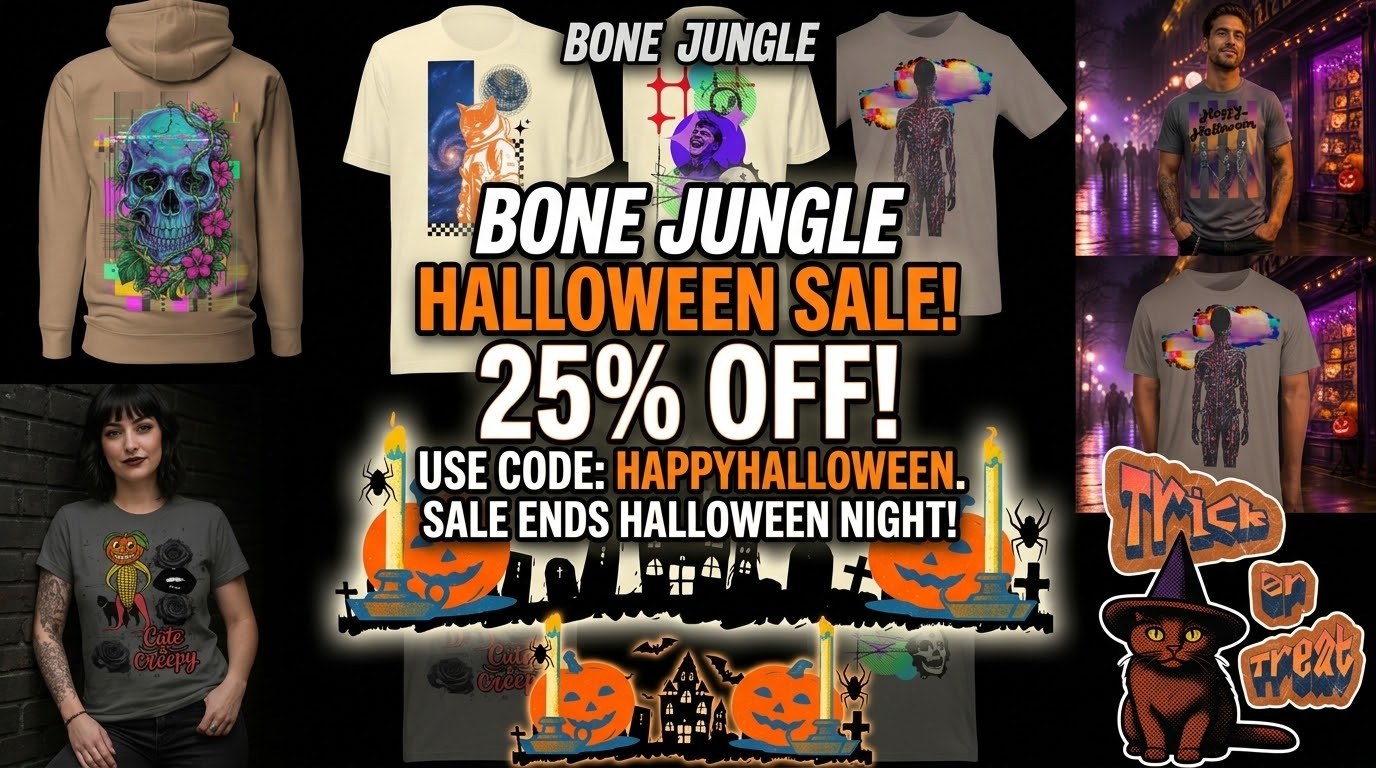
Seasonal malfunction · File 25 25% OFF the strange stuff with code Order by Oct 19 for Halloween · Portal seals Oct 31
BONE JUNGLE
Archive Ref. BJ-24-05 Collected: Somewhere Else Handle with curiosity

Bone Jungle

Souvenirs from somewhere slightly sideways.

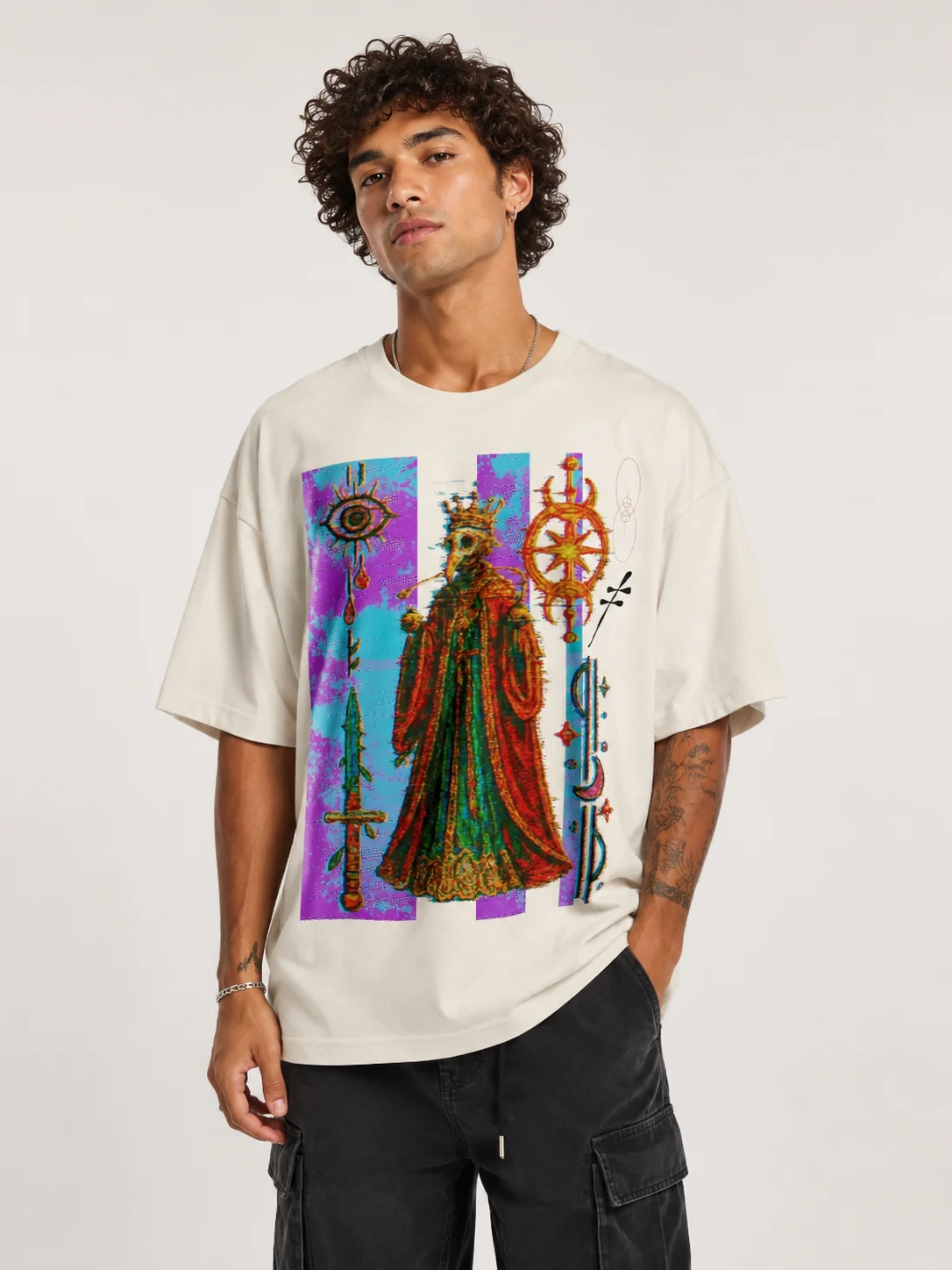
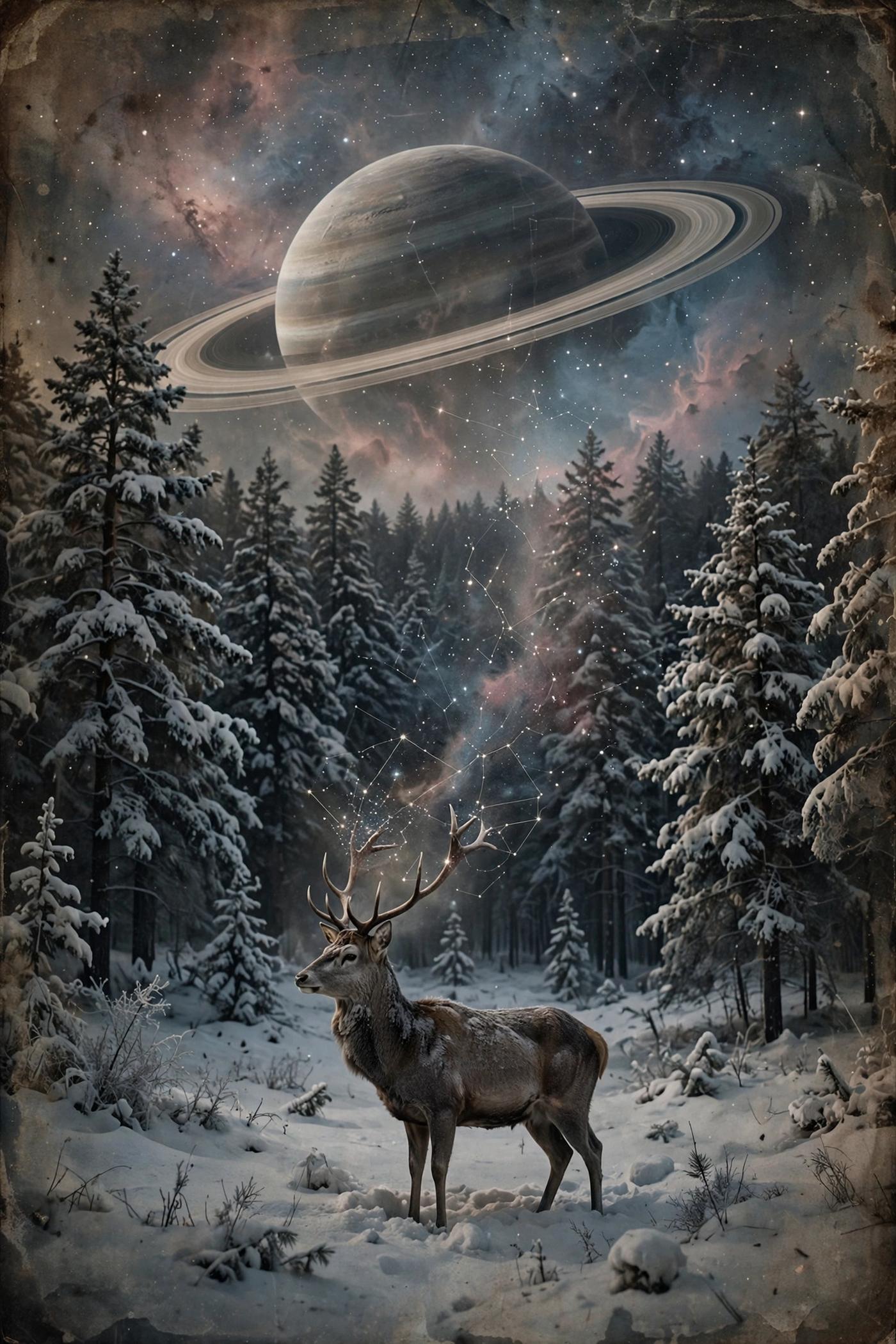
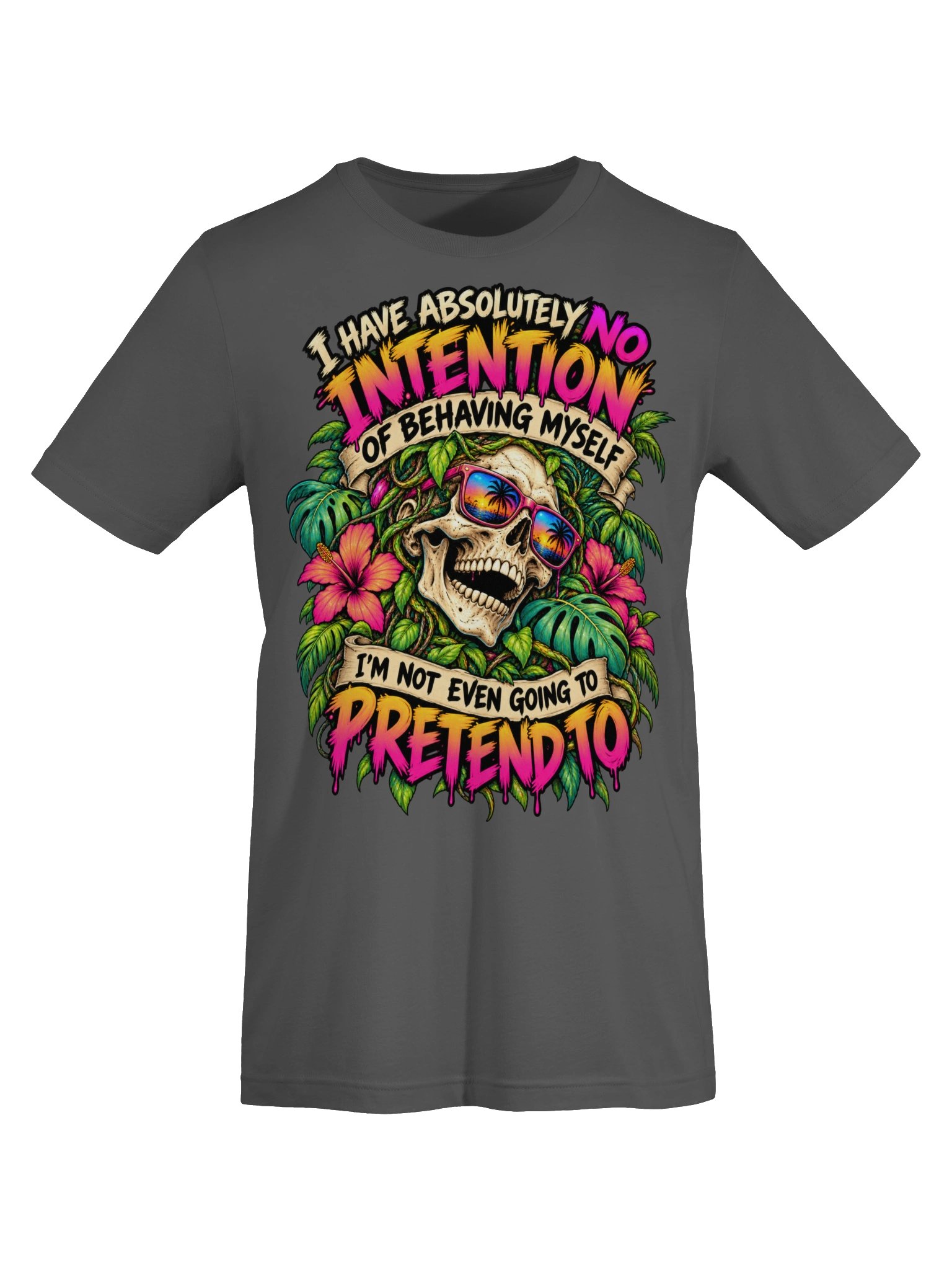
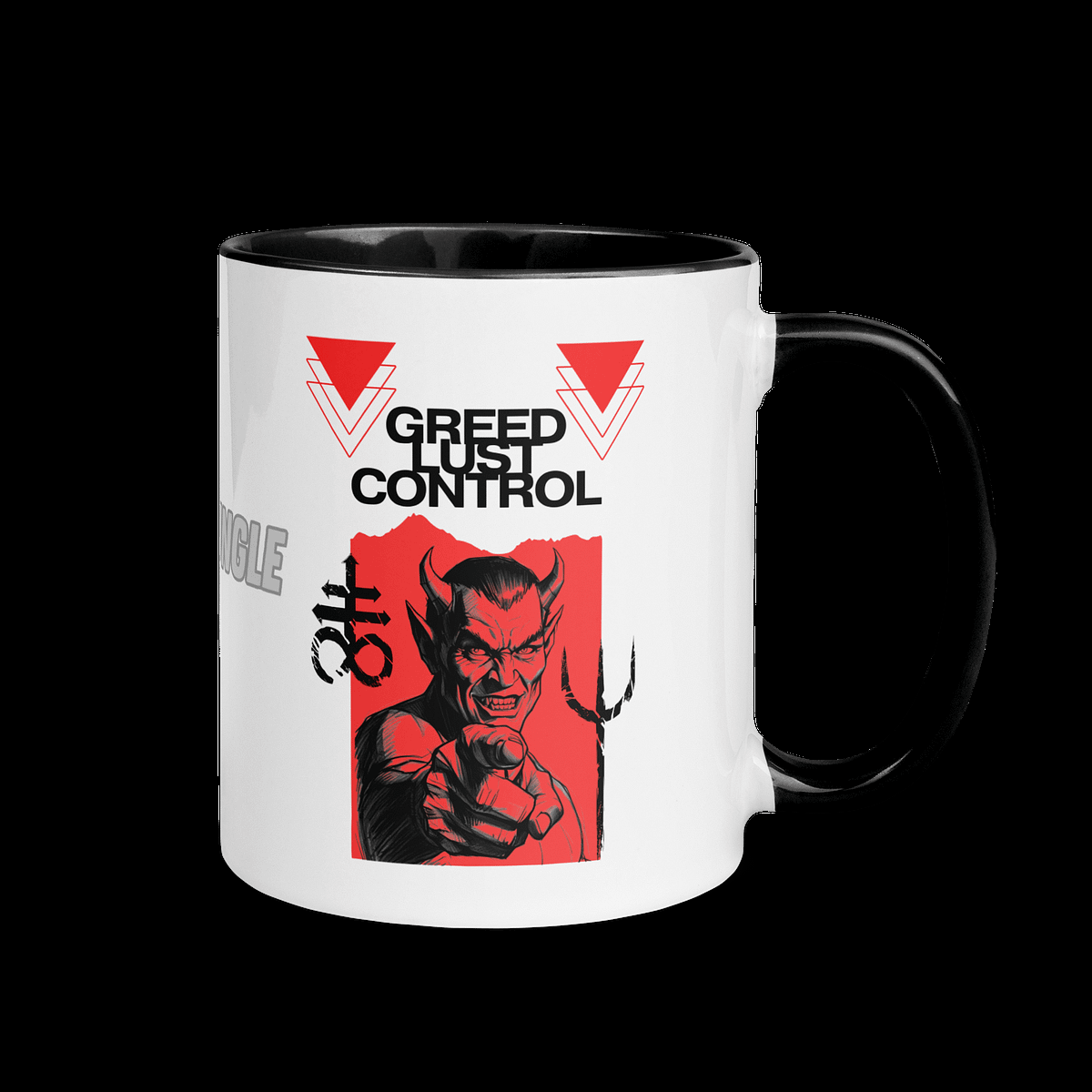
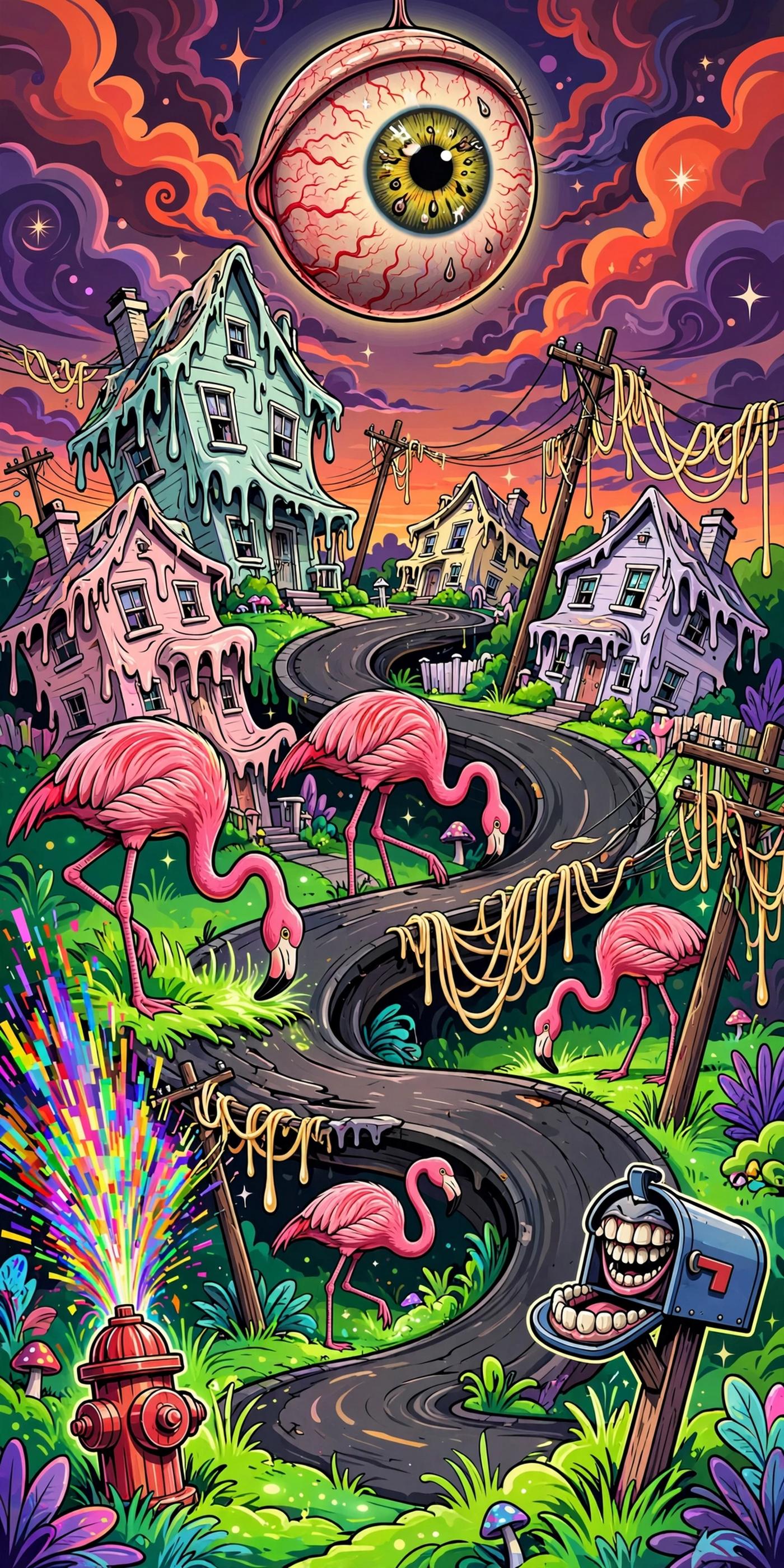
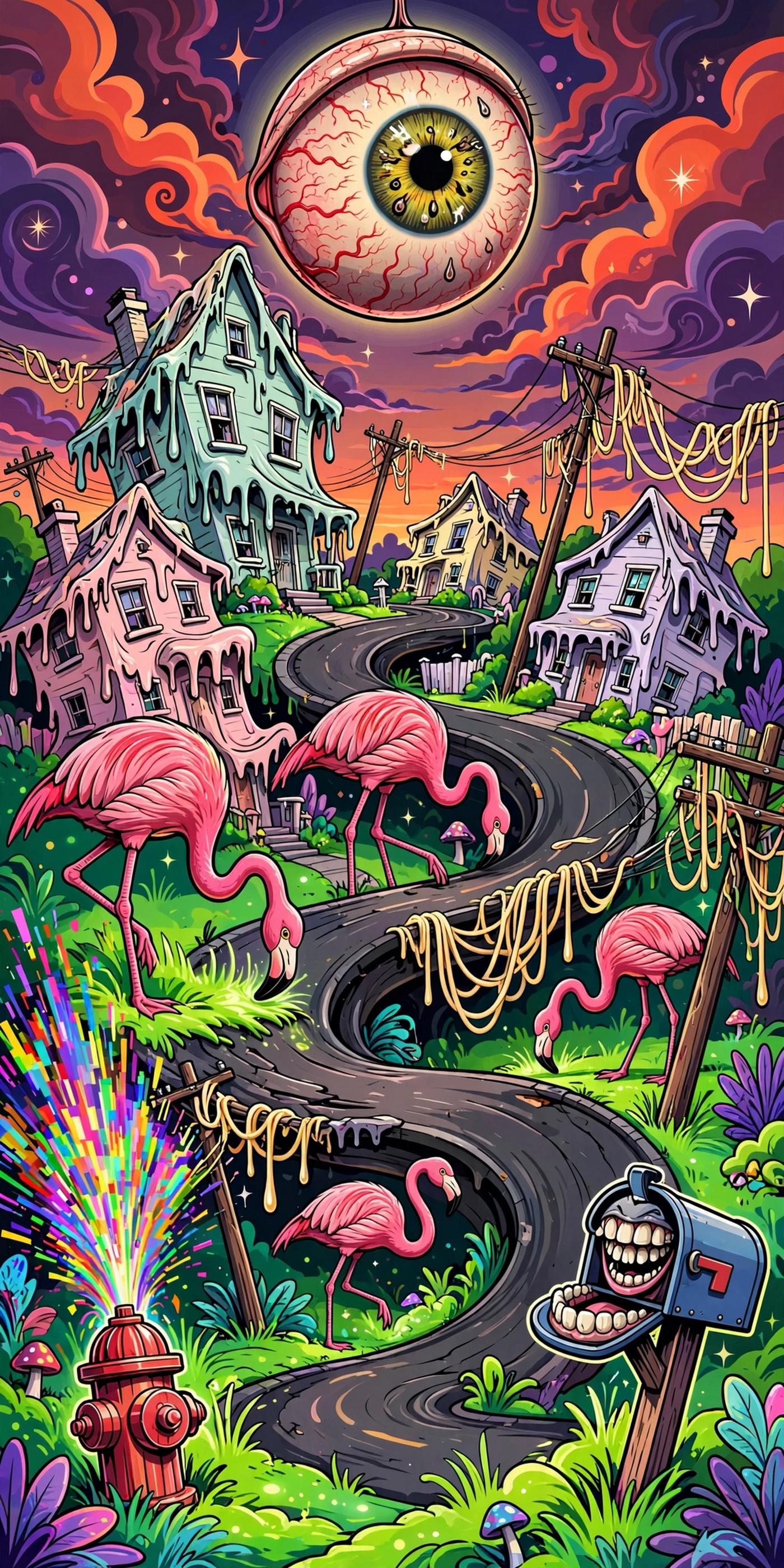
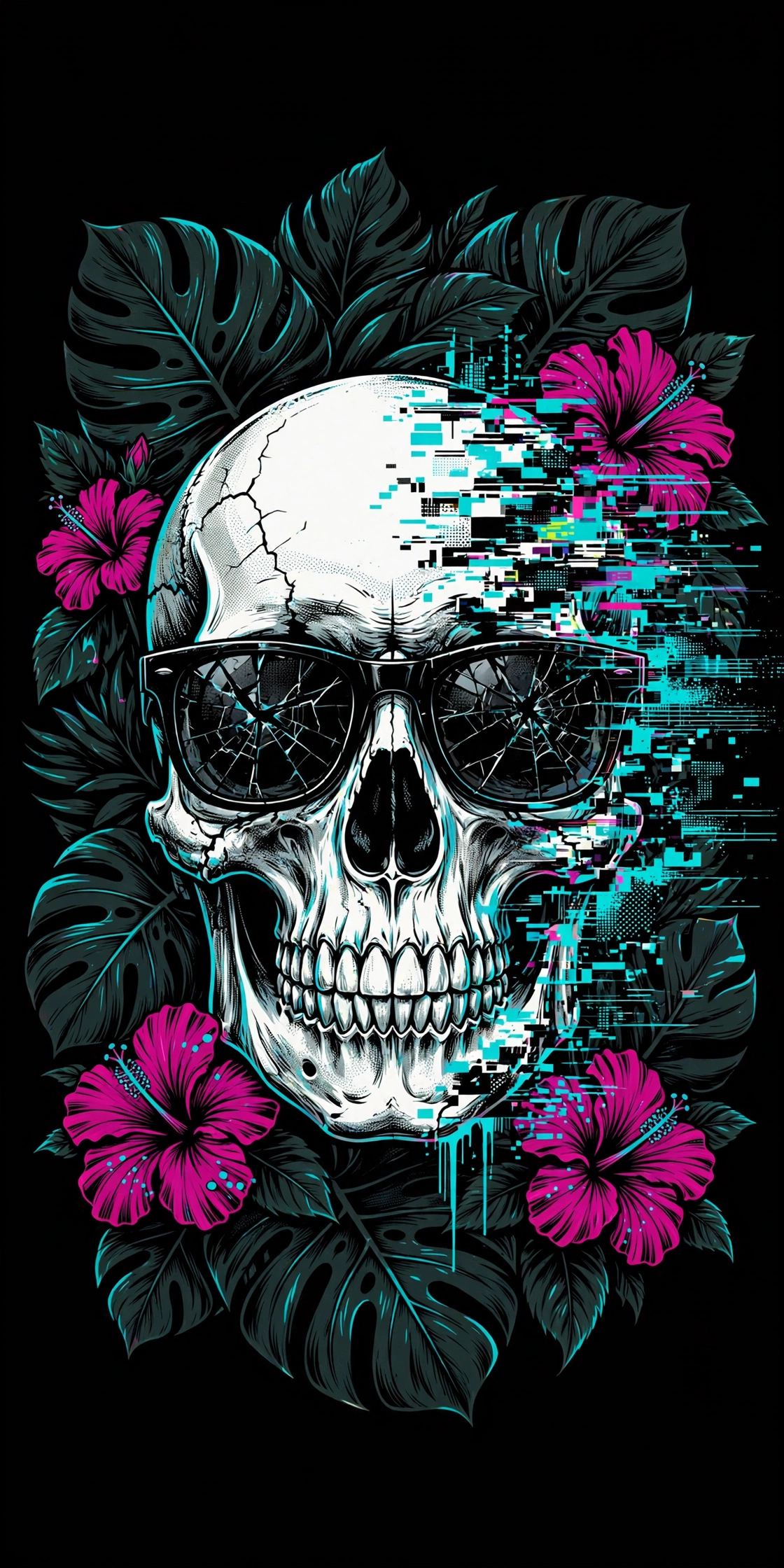
Original dark and surreal graphics by Randy — skulls in electric color, faces behaving suspiciously, little glitches where clean answers ought to be. Printed to order on tees, hoodies, stickers, mugs and whatever other vessel can carry the signal.

Made to order · Shipped worldwide · New drops monthly

Specimen № 001 — Best Seller
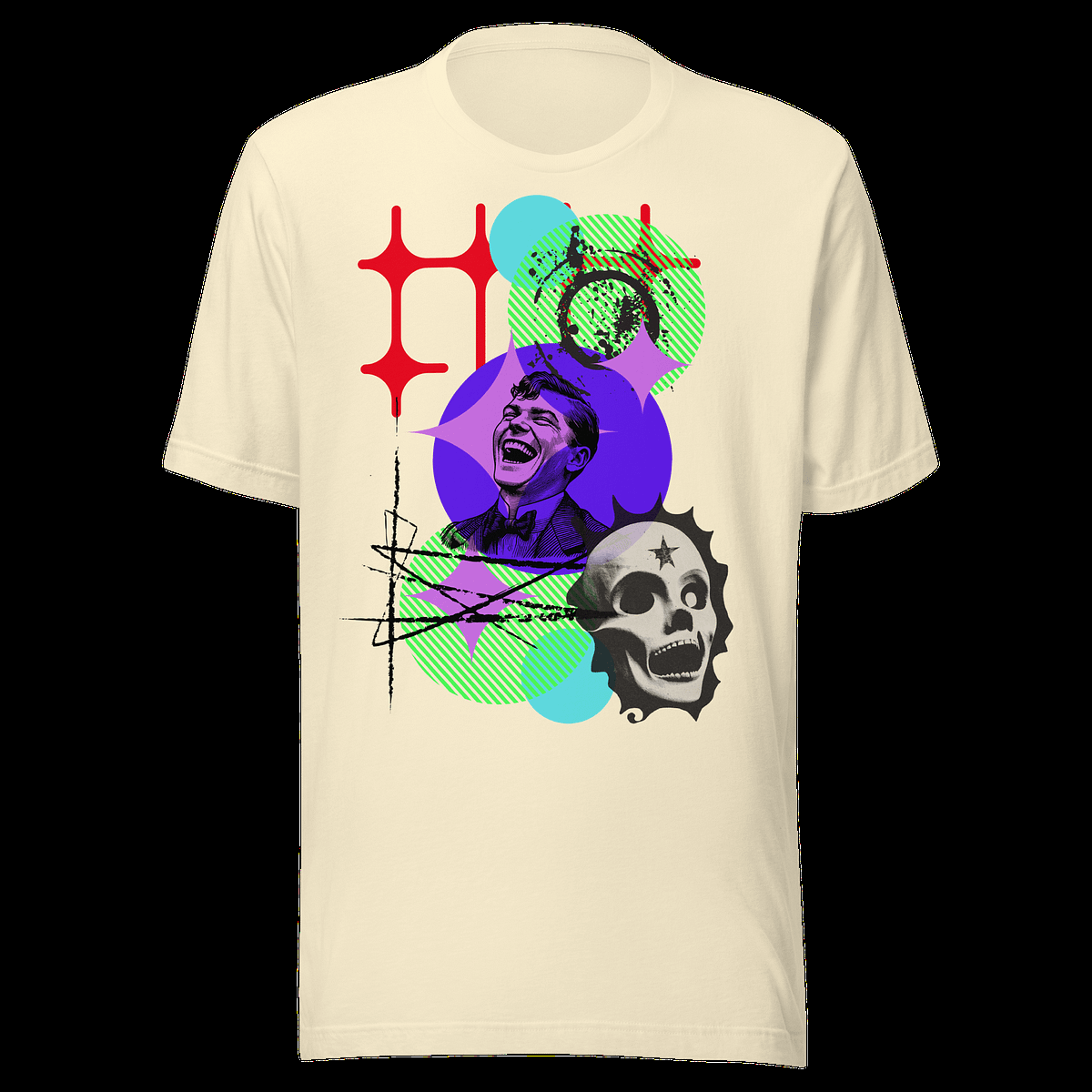
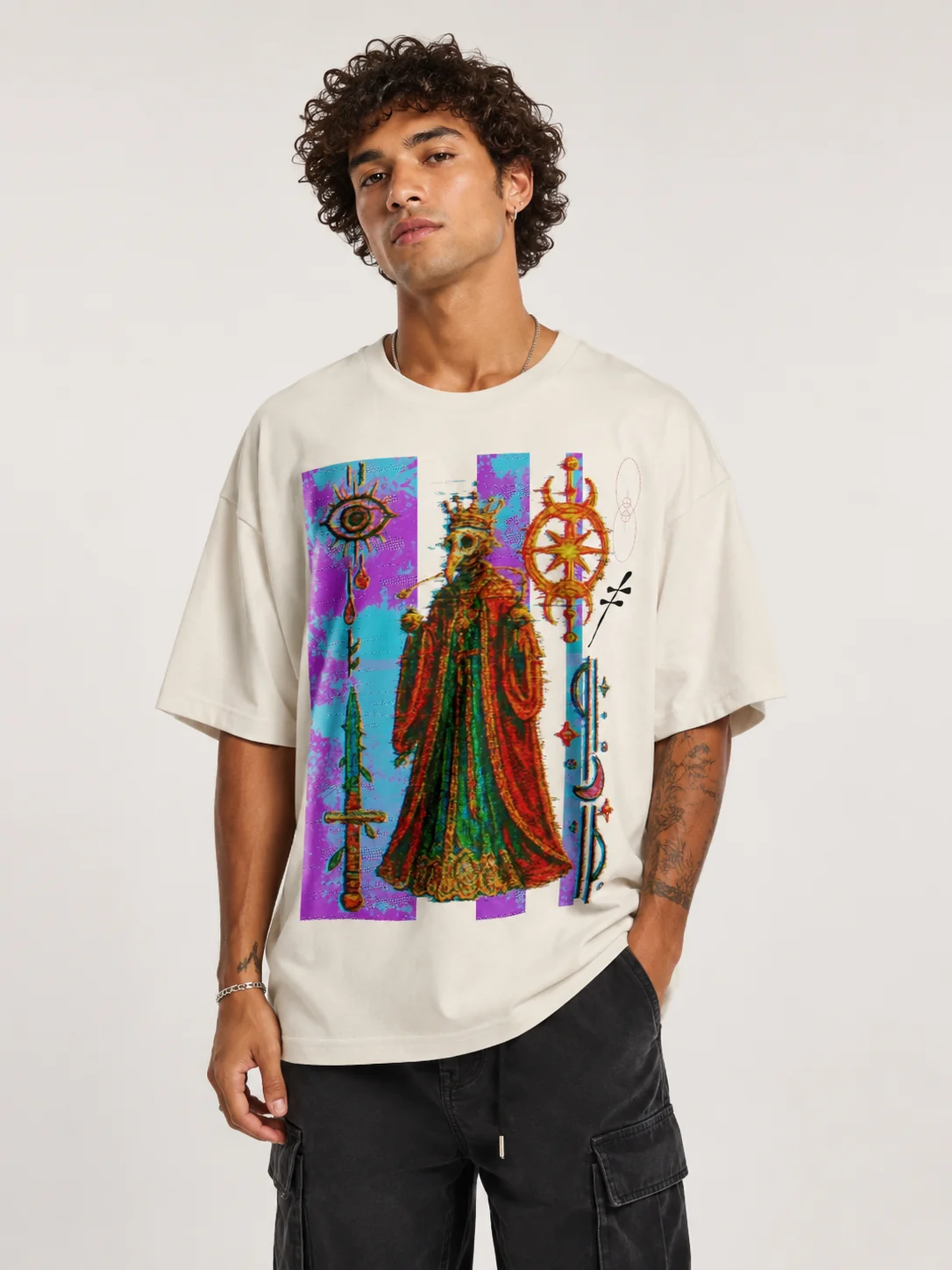
The Laughing Man T-Shirt — cream tee with a surreal collage of a laughing man in a purple circle, a skull with a star tattoo, and neon pop-art shapes
Fig. 01 — Partially Explained The Laughing Man Tee · $24
Section 02 — Heavy Rotation

The Shelf

The pieces doing the most work in the wild. Every one is made to order — pick your size in the shop and it gets printed for you, not pulled off a warehouse pile.

Section 04 — Written Transmissions

Journal

Field notes from the Fracture — cryptids, hijacked broadcasts, empty malls, and the science of dressing like you mean it.

Entry 01 · October 18, 2026

Dress Like the Final Boss: The Science of Wearing Weird Stuff

Every room has an invisible dress code. Then somebody walks in wearing something gloriously wrong — and the whole room recalculates. That is not an accident; it is a cheat code, and researchers have actually tested it.

Read the full post

Every room has an invisible dress code. Most people obey it without thinking. Then somebody walks in wearing something gloriously wrong — boots that belong at a concert, a graphic tee where a plain shirt was expected — and the whole room recalculates. That is not an accident. It is a cheat code, and researchers have actually tested it.

In 2014, Bellezza, Gino and Keinan published a study in the Journal of Consumer Research called "The Red Sneakers Effect." The setup was simple and ruthless. They looked at people who deliberately broke dress codes: gym clothes in a luxury boutique, red sneakers in a professional setting, the kinds of choices that should, in theory, make someone look careless.

It did the opposite. Observers rated the rule-breakers as higher in status and competence.

Read that again. Not despite the weird choice. Because of it.

The logic is cold and human. Anyone can follow a dress code; following one costs nothing and proves nothing. Deliberately breaking one, in full view of people who know the rules, signals autonomy. It says, I know exactly what the uniform is here, and I am secure enough not to need it. That confidence reads as power.

But there is a catch, and it is the whole game. The effect vanishes if the rule-breaking looks accidental. A stained shirt is not a statement. And it fades if observers do not know the norms being broken — you cannot get credit for breaking a rule nobody can see. Deliberate is the keyword. Weird on purpose is a signal. Weird by accident is just noise.

Then there is what the clothes do to you on the inside.

In 2012, Adam and Galinsky published research on what they called "enclothed cognition" — the idea that clothing changes the wearer's mind, not just the viewer's. In their study, people wearing a white lab coat made about half as many errors on attention tests as people not wearing one. Half. Same brains, same tests, different coat.

Here is the part that makes it Bone Jungle logic. The coat only worked when participants were told it was a doctor's coat. When the identical coat was described as a painter's coat, the effect disappeared. Nothing about the fabric changed. The meaning changed, and the meaning did the work.

So the effect needs two things at once: you have to actually wear the clothing, and the clothing has to carry symbolic weight for you. A garment you believe in changes how carefully you think and how you carry the mission. A random costume does not. A uniform you chose, loaded with meaning you assigned it, absolutely can.

Put the two studies together and the picture gets sharp. Dress weird on purpose and observers upgrade you. Wear something that means something to you and your own brain upgrades itself. The outside signal and the inside signal are the same outfit, working both directions at once.

That is why the final boss never dresses like the tutorial level. The final boss has a silhouette. A palette. A thing nobody else in the game is wearing. Not random, not sloppy — chosen, repeated, and worn like it was always the plan.

So build yours like that. Pick the piece that feels like yours and wear it until it becomes a signature. It is not too much if you meant it. Intention is the difference between a costume and a character, between getting dressed and loading in.

We keep a few final-boss pieces over at bonejungle.com, if your loadout needs an upgrade.
Permalink
Entry 02 · October 18, 2026

The Night Someone Hijacked Chicago TV Wearing a Mask

On November 22, 1987, television in Chicago got possessed — somebody reached into two live broadcasts, took them over wearing a Max Headroom mask, and vanished. Nobody has ever identified them. Nobody has ever been caught.

Read the full post

On November 22, 1987, television in Chicago got possessed. Not metaphorically. Somebody reached into two live broadcasts, took them over, and put on one of the strangest performances in broadcast history — wearing a Max Headroom mask, ranting nonsense at a city that had no idea what it was watching. Then they vanished. Nobody has ever identified them. Nobody has ever been caught.

To understand why this still hits, remember what television was in 1987. There was no feed, no algorithm handing you a thousand weird videos before breakfast. There were a handful of channels, trustworthy in a boring, furniture-like way. The TV told you the weather, the scores, the news. It did not glitch into a masked stranger. Except, one night in Chicago, it did — twice.

The first takeover hit WGN-TV. Then, later that same night, it happened again at WTTW. Two stations, one night, same intruder energy. The second intrusion lasted about 90 seconds, which in broadcast time is an eternity. Ninety seconds of a masked figure on a major station, swaying, rambling, producing a stream of nonsense that made perfect sense to exactly one person on Earth — the person wearing the mask.

Ninety seconds is long enough to ask every question that matters. How is this happening? Who is doing this? Why is nobody stopping it? The uncomfortable answer underneath all three was the same: somebody out there understood the broadcast system well enough to climb inside it, and the people running the system could not immediately throw them out.

That is the analog glitch in its purest form. Today, a hijack would be a hacked account, a leaked password, a terms-of-service violation resolved by morning. In 1987, getting inside a television signal was physical, technical, and audacious. It required real knowledge of how the signal moved and real nerve to use it, live, in front of an entire city, with no edit button and no undo.

And then there is the mask. Choosing Max Headroom was the masterstroke. Max Headroom was already a glitchy, stuttering, artificial TV personality — a character who looked like television malfunctioning on purpose. So when a real malfunction arrived wearing that face, reality and the joke folded into each other. Viewers were not just watching an intruder. They were watching the medium itself turn strange, wearing the one mask that made the strangeness look intentional.

That layering is why the incident refuses to die in the culture. A masked figure, an interrupted signal, a rant nobody can fully decode — every element is a door with nothing behind it. There is no manifesto to argue with. No culprit to interview, forgive, or cancel. No ending, period. The case simply stops, mid-transmission, and the static keeps the secret.

Most mysteries rot when they go unsolved because the questions get stale. This one stays fresh because the questions were never really about who did it. They are about how fragile the normal picture is. One night proved that the most controlled, professional, one-way medium of its era could be interrupted by a single unknown person with the right knowledge and a rubber mask — and that the interruption could outlast everything that was scheduled around it.

Somewhere, presumably, there is a person who knows exactly what happened on November 22, 1987, down to the last second. They have carried that secret through an entire era of television changing beyond recognition. The broadcast ended. The mystery never did.

Cut to static. Roll credits that never come.

Permalink
Entry 03 · October 18, 2026

Cryptids Have Better Style Than You

Nobody remembers a blurry monster. The creatures that survive in the culture are the ones with a silhouette you can draw from memory — Mothman, the Fresno Nightcrawler, the Jersey Devil. They committed to a look.

Read the full post

Let us be honest about the cryptids. Nobody remembers a blurry monster. The creatures that survive in the culture for decades are not the strongest or the scariest — they are the ones with a silhouette you can draw from memory after seeing it once. They committed to a look. Most humans, presented with infinite wardrobe options every morning, commit to nothing and are forgotten by lunch.

Exhibit A: Mothman. Point Pleasant, 1966. A winged figure with glowing red eyes, and that is essentially the whole design brief. Wings. Red eyes. Darkness. Done. There is no clutter, no accessories, no attempt to be five things at once. Just a shape in the night with two burning points of light where the face should be, and it has haunted the imagination ever since. That is not a monster description. That is a logo. If you saw that silhouette on a black background with no text at all, you would know exactly who it was — and being recognizable at a glance, in the dark, is the highest achievement in all of style.

Exhibit B: the Fresno Nightcrawler, which took the opposite route and won with pure absurdity. The footage, from 2007 and again in 2011, appears to show a pair of pale legs walking serenely across a yard. No torso. No head. No arms. Just walking pants, out for an evening stroll, unbothered by the fact that they are anatomically impossible. Every other cryptid is trying to frighten you. The Nightcrawler is just going somewhere, and its calm is what makes it unforgettable. It is the minimalism lesson nobody asked for: remove everything that is not essential, keep walking, and let the world lose its mind trying to explain you.

Exhibit C: the Jersey Devil, the chaos entry. Where Mothman is minimal and the Nightcrawler is minimal-er, the Jersey Devil is a committee decision — a creature assembled from parts that should not share a body, haunting the pines like a rumor that refused to pick one form. And somehow that works too, because total commitment to a mismatched design is its own kind of coherence. The Jersey Devil never apologized for the collage. It just kept showing up in it, decade after decade, until the collage became iconic. There is a lesson in there for anyone who has ever been told their look is "a lot." A lot, worn consistently, becomes a signature.

Now look at the pattern underneath the folklore. None of these entities had a stylist, a brand deal, or a second chance at a first impression. They were seen briefly, badly, in the worst possible lighting — and the look still landed, permanently. Why? Because each one is built on a single strong idea, repeated without hesitation. Red eyes. Walking legs. Beautiful mismatch. One idea, fully sent.

Most personal style fails in the exact opposite way. It hedges. It borrows a little from everywhere and lands nowhere. It asks the mirror for permission. The cryptids never asked. They appeared in the treeline, in the yard, in the pines, dressed as exactly what they were, and let the witnesses do the marketing for the next fifty years.

That is the whole curriculum. Find your one strong idea. Wear it like you were spotted in it once, in 1966, and people are still describing it. Because the goal was never to be seen clearly.

The goal is to be impossible to describe as anything else.

Permalink
Entry 04 · October 18, 2026

Why Your Brain Can't Stop Thinking About Empty Malls

You have seen the photos. A mall food court with every chair tucked in and nobody sitting in any of them. Nothing is happening in these images, nothing is about to happen — and you cannot stop looking at them.

Read the full post

You have seen the photos. A mall food court with every chair tucked in and nobody sitting in any of them. A corridor lit like noon at midnight, leading to a store that no longer exists. An office hallway, a hotel passage, an escalator going nowhere near anyone. Nothing is happening in these images. Nothing is about to happen. And you cannot stop looking at them.

These are liminal spaces — places built for passing through, photographed in the moment when nobody is passing. And your brain has opinions about them that it will not shut off.

Start with the obvious: these places were designed for crowds. A mall is not a building, it is a machine for moving people past storefronts. Every light, every tile, every echoing footstep sound effect in that architecture assumes human traffic. So when the traffic is gone, the place does not read as peaceful. It reads as paused mid-sentence. Your brain keeps waiting for the rest of the sentence — the shoppers, the noise, the life the room was built to hold — and the waiting itself is the haunting.

That is the first trick. The second is memory. Empty malls do not just look abandoned; they look familiar. The color palette, the planters, the food court glow, the particular optimism of a fountain indoors — for a huge number of people, that is the wallpaper of being young, broke, and nowhere else to be. So the emptiness lands twice. It is a place you know, with everyone you knew in it removed. Nostalgia with the people airbrushed out is not warm anymore. It is a home movie of a house you have never lived in, and your brain cannot decide whether to move in or run.

The backrooms took that feeling and removed the exit. The idea spread because it named something everyone had already felt in real life: the wrong hallway in a school after hours, the service corridor behind a store, the stairwell that looks like every stairwell and therefore like none of them. Endless transitional rooms, humming with light, carpeted like a waiting room for a meeting that will never start. The horror is not that something is in there with you. The horror is that the place seems to continue whether you are in it or not, and it was never built with you in mind.

That is the real secret of liminal dread. A haunted house wants you. It creaks at you, watches you, performs for you. An empty mall does not care about you at all. You are not the protagonist in a liminal space. You are a glitch in its schedule — a person standing in a room designed for people in general, which turns out to be a very different thing from a room designed for a person.

And yet we keep going back to the photos. We save them, share them, set them as wallpapers, fall asleep watching tours of dead malls. Because underneath the unease there is something almost like rest. No crowd to perform for. No store open, nothing to buy, nowhere the corridor is trying to deliver you. The machine is off. For once, a commercial space is just a space — strange, echoing, and asking nothing.

The surreal was never hiding in another dimension. It is the food court at 2 a.m. It is the corridor behind the ordinary world, waiting with the lights on.

You just have to notice it — and then decide how long to stay.

Permalink
Entry 05 · October 18, 2026

Horror Is a Dress Code

Here is a strange and completely human thing to do: be frightened of something, then put its face on your chest and wear it to the grocery store. Horror fans do it constantly — and it is not a contradiction, it is the entire point.

Read the full post

Here is a strange and completely human thing to do: be frightened of something, then put its face on your chest and wear it to the grocery store.

Horror fans do this constantly, and it is not a contradiction — it is the entire point. The reaper, the skull, the haunted house, the thing with too many teeth: printed on a shirt, it stops being a threat and becomes a flag. You are not dressing as the victim in the movie. You are dressing as the person who watched the whole movie, loved it, and walked out wearing the poster.

That is the first job horror fashion does. It is armor. Fear is an experience that happens to you; a horror tee is fear you selected, sized, and put on yourself. The difference between those two things is the difference between being haunted and doing the haunting. People who have made friends with the dark tend to dress like it, because clothing is the fastest way to tell the world — and, on rough days, yourself — that the scary thing does not get the final say. The monster is on the shirt. The shirt is on you. You are wearing the thing, not the other way around.

The second job is identification, and it works faster than conversation. A stranger in a horror tee across a parking lot has already told you a full paragraph about themselves: they like the same late-night channel of the imagination that you do. They have a favorite final girl, a favorite practical effect, a strong opinion about a sequel. Band tees do the same work in metal and goth fashion — the shirt is a password that does not need to be spoken. In scenes built around music that the mainstream found too loud, too dark, or too strange, the uniform was never really about looking alike. It was about being findable. Wear the signal, and your people can locate you in any crowd on Earth.

That is why horror fashion is, quietly, the most honest fashion there is. Most clothing pretends — it borrows status, toughness, a lifestyle the wearer is still loading. Horror merch does the opposite. It announces an actual inner life: I think about death, transformation, the thing in the basement — and I think about them fondly, in public, on purpose. There is no aspirational filter on a skull. The skull is the filter removed.

It also explains why the look refuses to stay in October. If horror were just seasonal decoration, the tees would go back in the drawer with the plastic fangs. They do not, because it was never a holiday. It is a year-round position: the world is weird, the dark is real, and the correct response is to dress like you have already been through it and come out with opinions.

Notice, too, how horror style ages. A great horror graphic only gets better as the shirt fades. The cracks in the print read as wear, history, survival — every concert, every midnight movie, every ordinary Tuesday it armored up for. A pristine horror tee is almost suspicious. The faded one has credentials.

So no, wearing monsters is not morbid, and it is not a phase to be summarized politely at family dinners. It is a dress code with a philosophy stitched into it: befriend the dark before it introduces itself.

Wear the nightmare. Walk like you own the house it haunts.

If that is your dress code too, you will probably feel at home at bonejungle.com.

Permalink
Seasonal Malfunction · File 25

25% off the strange stuff

–
Days
–
Hours
–
Minutes
–
Seconds
HAPPYHALLOWEEN

Use the code at checkout in the Bone Jungle store. Order by October 19 to get your piece in hand by Halloween — everything is printed to order, and the print queue gets haunted this time of year. The portal seals on Halloween night.

Shop the Halloween sale
Section 06 — Field Notes, Entry One

Why Bone Jungle exists

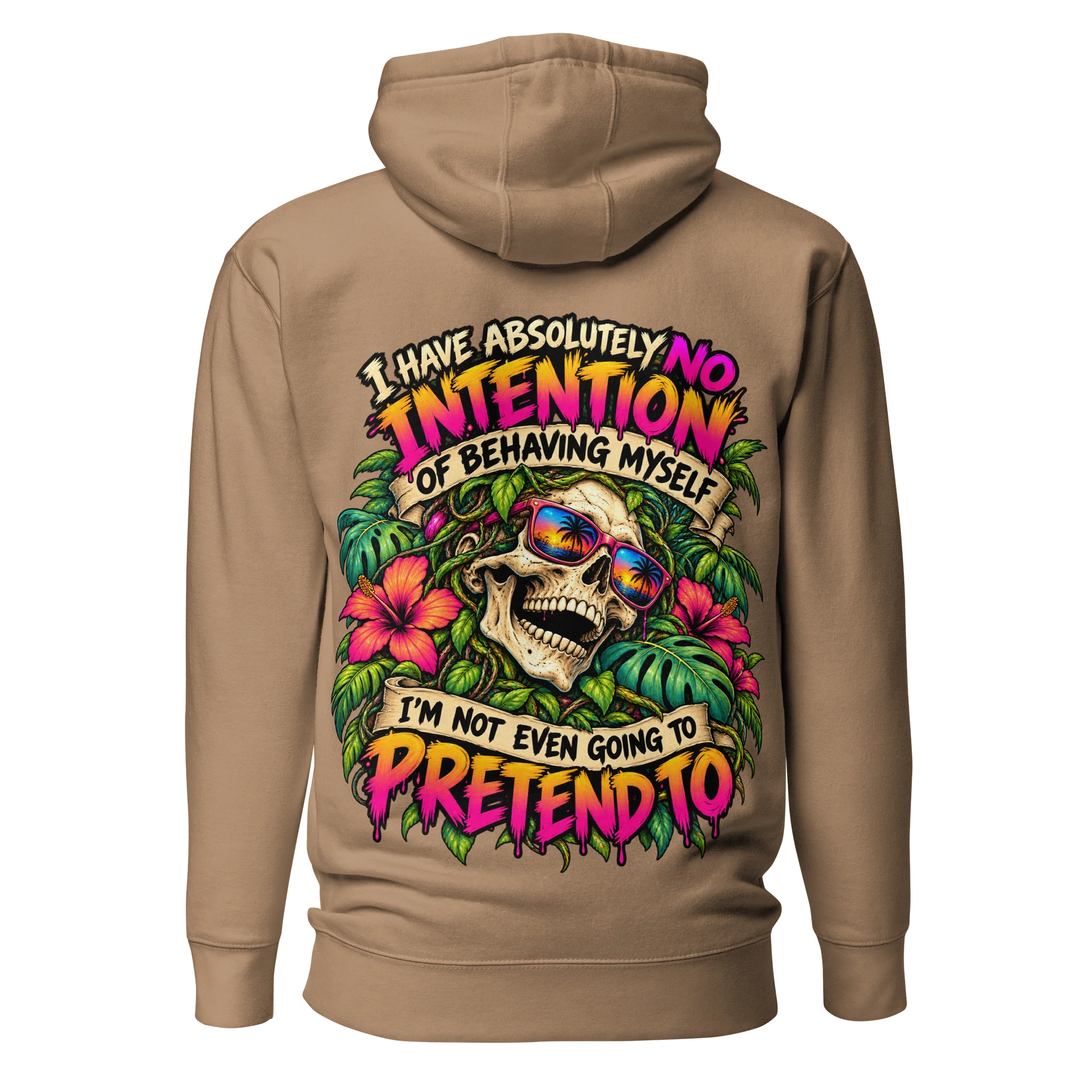
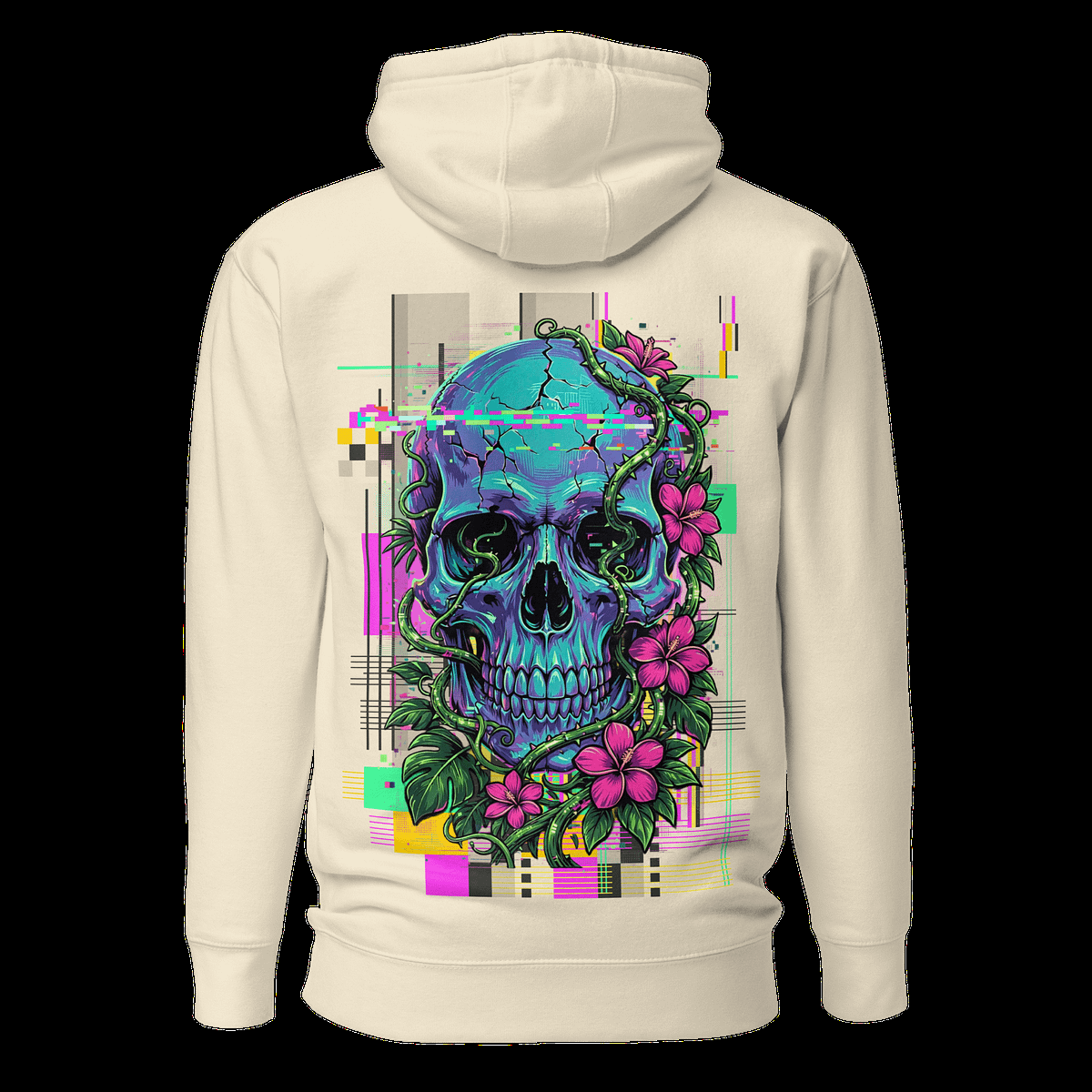
Spooky Mode Premium Hoodie — Bone Jungle artwork worn in the wild

Bone Jungle exists for the people who have spent a lifetime being told to soften the edges, explain the weird part, make it easier to understand, or maybe just choose something more normal. That sounds exhausting. The Jungle has no interest in fixing that.

This is a place for dark colors, bright interruptions, strange faces, crooked symbols, creatures with too many teeth, and thoughts that refuse to sit still. The graphics are made by Randy, then sent out into the world on whatever form can carry them: a shirt, a hoodie, a mug, a journal, a sticker — a small proof that you do not have to blend in to belong somewhere.

The ordinary has enough representation

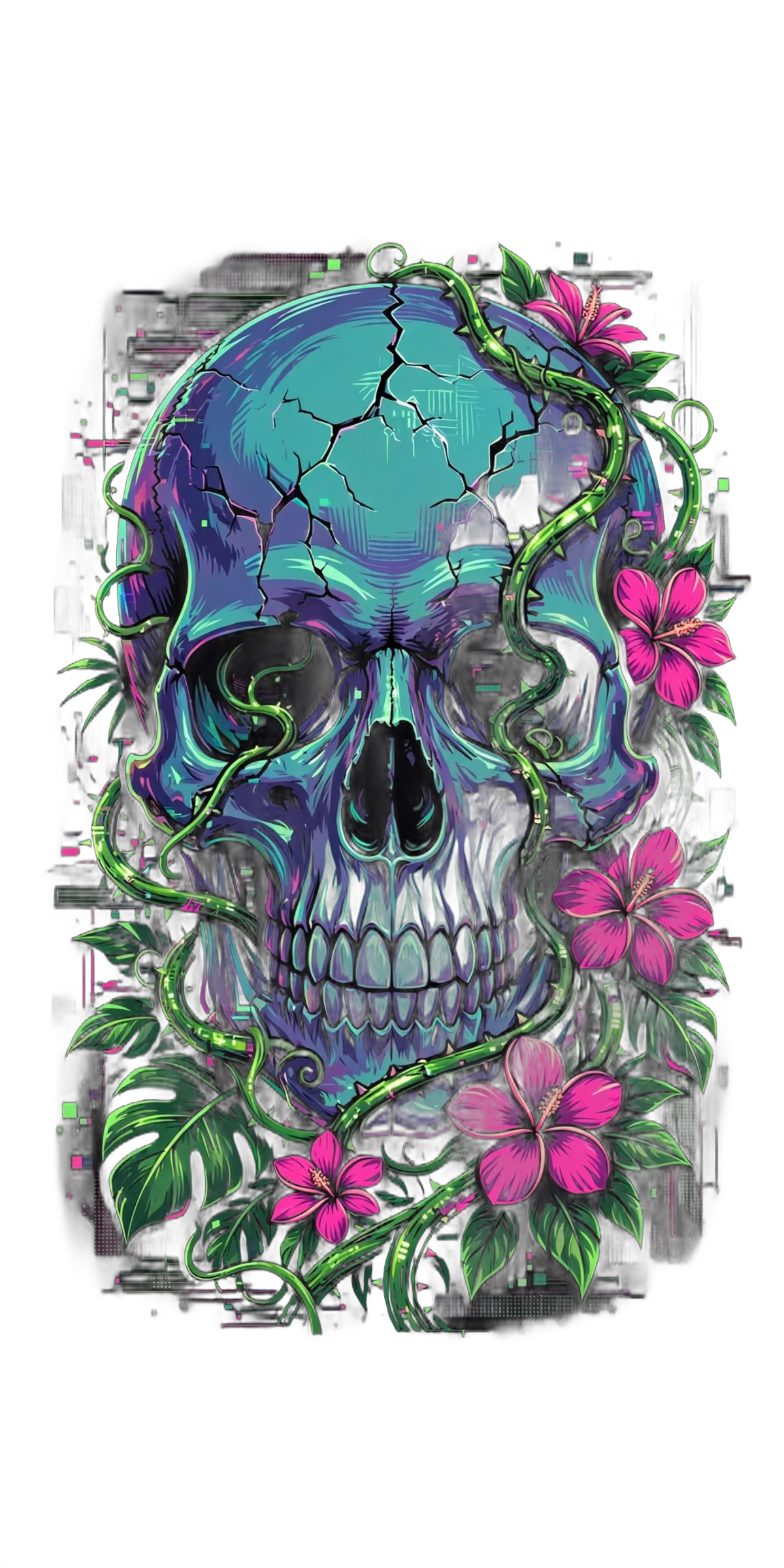
There is no shortage of clothing designed to disappear into the background. Bone Jungle is for the other impulse — the one that wants an image with a pulse. The one that notices a skull hidden under flowers, a happy face behaving suspiciously, a little glitch where a clean answer ought to be. If it makes you look twice, it is doing its job.

Not a costume. A signal.

There is a difference between wearing something because it is currently allowed and wearing something because it feels like yours. Bone Jungle is for the second thing. The Jungle does not ask for membership. There is no correct amount of weird. You can be here because you like a skull in electric color, because a particular line made you laugh, or because you needed one object in your day that did not behave itself. That is enough.

Made to order, made for the unusual

Every item is made to order. That keeps the focus on the graphic and the person choosing it, instead of mountains of things waiting to become somebody else's problem. You choose the form. The shop handles the order. The piece finds its way from the Jungle to you.

Take what follows you home.
Leave the rest in the trees.

Section 07 — Census of the Fracture

Residents

The Jungle has lore, and the lore has tenants. Some of them end up on shirts. All of them were here before you arrived, and the Custodians ask that you not feed them after midnight.

Resident 01

Vellux the Smiler

Grins from the far side of the Fracture. The smile is not a threat. It is also not not a threat.

Resident 02

Glyph

The Jungle's resident glitch — part mascot, part error message, fully unbothered. If the site flickers, that's Glyph saying hello.

Resident 03

Seraph.ix

An angel rebuilt from corrupted files. Nine wings, three of them buffering. Do not ask about the version history.

Resident 04

Written Flesh Protocol

The body, treated as a document still being edited. At least one tee in the shop carries its signature.

Resident 05

The King in Yellow

Visiting royalty. His room in the Ethereal Courtyard is kept ready, and the play is never, ever staged.

Section 08 — Questions from the Undergrowth

Frequently asked

What is Bone Jungle?

Bone Jungle is a world of dark, surreal graphics by Randy, made for people who feel more at home just outside the ordinary.

Is Bone Jungle only clothing?

No. The work moves between tees, oversized fits, crop tops, hoodies, mugs, journals, stickers and whatever other vessel feels right for the image.

Where can I find Bone Jungle pieces?

Every piece in the shop is made to order and ships through the Bone Jungle Fourthwall store — this site is the front door, the shop is where orders happen.

How does made-to-order sizing work?

Because pieces are printed to order, the shop can't take general or sizing returns — so check the size notes on each product page. The premium hoodies, for example, run a touch tight: size up if you're between sizes.

When should I order for Halloween?

Order by October 19. Made-to-order printing takes a few business days before shipping, and late October gets busy. The HAPPYHALLOWEEN code runs through Halloween night, but the delivery math doesn't care about the code.